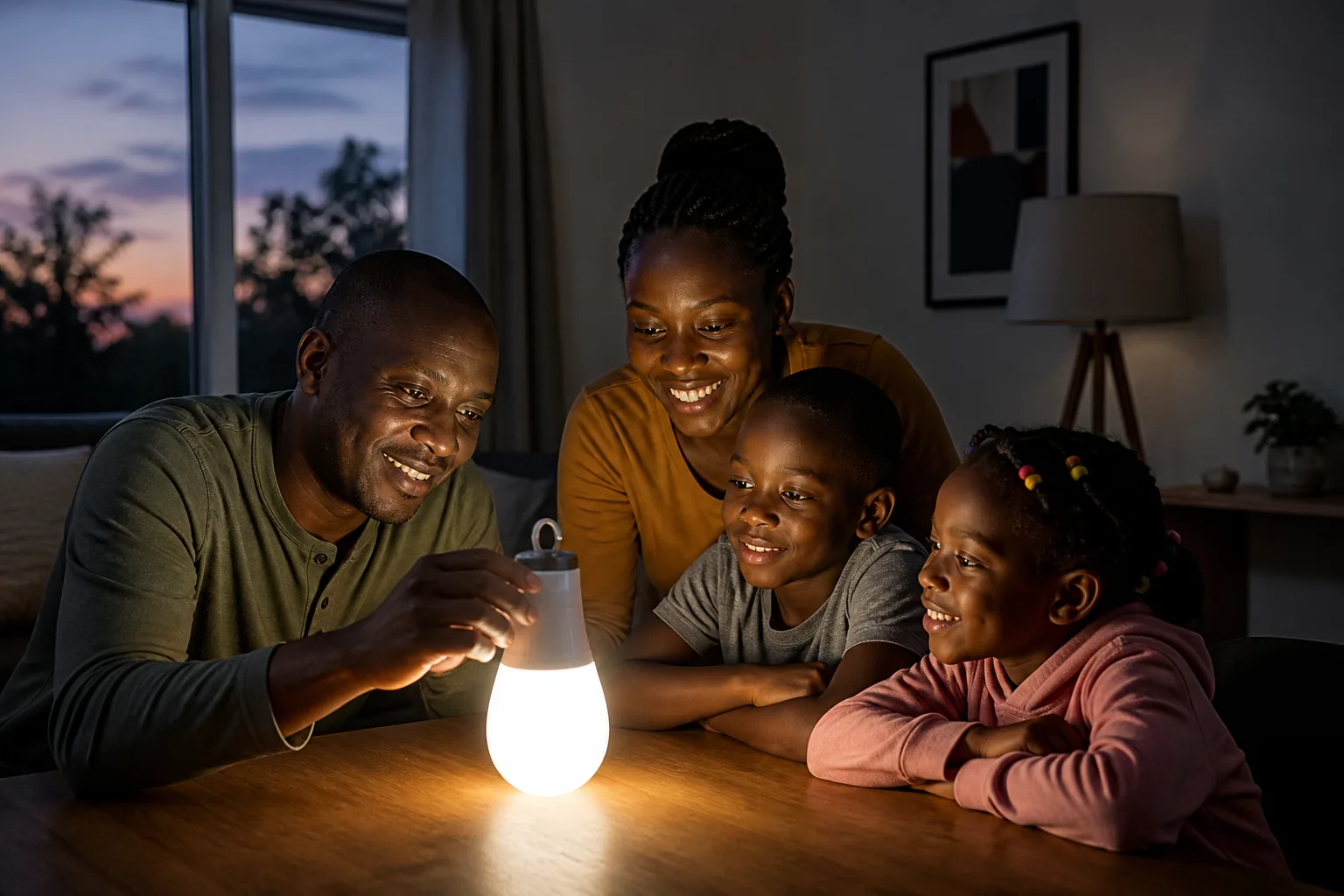
A rechargeable emergency bulb Kenya shopper usually wants one simple result: useful light when mains power fails. Yet two bulbs that look identical can differ in fitting, charging logic, emergency brightness, battery size, runtime and safety instructions. A headline such as “four hours backup” is not enough to show whether the bulb will work in your room and lamp holder.
An emergency bulb normally combines an LED lamp, charging electronics and an internal rechargeable battery. During normal supply it operates or charges according to its design; during an outage it may switch to battery power when the circuit conditions tell it that mains has failed. The exact behaviour varies. Before buying from electronics and accessories listings, request the model manual rather than relying on a generic demonstration video.
Confirm how the bulb detects an outage
Many self-contained bulbs are designed for an ordinary light fitting, but they do not all respond to switches and outages in the same way. Some must remain connected to a live circuit to charge. Some illuminate from the battery only when the wall switch is in a particular position and a closed load path is detected. Others include a hook, cap or special holder for portable use.
Ask the seller to answer these questions for the exact model:
- Does it charge while the wall switch is off, on, or either?
- What indicator shows charging and full charge?
- Does it turn on automatically when supply fails?
- Can the user turn emergency mode off to conserve the battery?
- Will it operate in a multi-bulb fitting, sensor lamp, dimmer or smart switch?
Do not assume that a bulb demonstrated by touching its terminals will behave the same way in your home's wiring. Never touch lamp contacts or improvise a live test. Install, test and operate it only as the manufacturer instructs.
Match the base and physical fitting
The base code is a hard compatibility requirement. E27 is a common screw base; B22 is a bayonet base. They are not interchangeable without a suitable, safely rated adapter, and an adapter can change the bulb's position or clearance. Confirm the code printed on the existing lamp and the new bulb.
Also check the bulb's diameter, length and weight. A large battery-backed bulb may not fit inside a narrow shade or enclosed globe. Enclosed fittings can trap heat, and some LED products are not approved for them. Likewise, a dry indoor bulb should not be used in a bathroom, outdoor fixture or other wet location unless the product carries an appropriate rating for that environment.
The supply rating on the bulb must match the installation. A correct-looking cap is not enough. If the holder is loose, cracked, scorched or intermittent, have it repaired by a qualified electrical worker before installing another lamp. EPRA safety guidance advises avoiding damaged electrical parts and using certified electricians for electrical work.
Compare lumens, not watts alone
Watts describe power consumption, not how much visible light reaches the room. Lumens are the more useful brightness measure. For an emergency bulb, buyers need two values where the design has two operating levels:
- normal-mains light output; and
- battery or emergency-mode light output.
Emergency mode is often dimmer to extend runtime. A listing that advertises only the normal brightness can therefore create the wrong expectation during an outage. Ask whether the quoted lumens apply to mains mode, emergency mode or both.
Consider the task as well as the number. Low output may be enough to identify a corridor or find a torch. Reading, cooking or working at a desk may require more useful illumination and better positioning. Colour temperature—often described as warm, neutral or cool white—changes the appearance of the room but is not a substitute for adequate brightness.
Treat runtime as a tested condition
“Up to six hours” is not the same as six hours at full advertised brightness. Runtime depends on battery energy, emergency output, battery age, temperature, state of charge and the control circuit. Some lamps gradually dim; others switch between set levels or shut down at a threshold.
Ask for the manufacturer's rated emergency duration and the conditions behind it. Useful listing details include:
- emergency-mode lumens throughout the test;
- battery chemistry and rated capacity or energy;
- time required to recharge under stated conditions;
- whether the first use requires an initial charge;
- expected battery replacement method, if replaceable; and
- the warranty period for the lamp and battery.
Do not compare capacity numbers unless the voltage and measurement basis are also clear. A larger milliamp-hour figure printed without context does not prove longer useful illumination.
IEC 60598-2-22:2021 specifies particular requirements for emergency luminaires and includes provisions relevant to self-contained products and lithium batteries. A marketplace listing's use of words such as “emergency grade” does not itself demonstrate testing to that standard. Ask for the applicable test report, certification or conformity record and verify that it matches the exact model—not merely the brand.
A bulb is not automatically a building emergency-lighting system
A rechargeable household bulb can be helpful during a blackout, but it should not automatically be treated as the legally or technically required emergency lighting for an office, apartment block, school, clinic, shop or public exit route. Formal emergency lighting considers placement, minimum illumination, duration, changeover, inspection and the safe visibility of escape routes.
If the light is for occupational safety, public premises or evacuation, obtain a competent design based on the applicable building, fire and electrical requirements. A portable bulb or marketing runtime claim cannot replace that assessment.
For a home, think in layers. One emergency bulb may cover a frequently used room; a charged torch or lantern can provide movable light; an appropriate backup unit may support a router or other essential low-power device. Do not connect improvised batteries to a mains lamp.
Check product identity and quality evidence
Look for a legible brand, manufacturer or responsible supplier, model number, batch information, electrical ratings and instructions. KEBS explains the different marks used for qualifying locally manufactured and imported products. A printed logo alone should not end the check: use the current KEBS verification channels where available and confirm that any referenced permit applies to the model or product family offered.
Read the listing images closely. If the box, bulb and manual show conflicting wattage, capacity or runtime, ask the seller to resolve the discrepancy in writing. Be cautious of stock photographs that hide the rating panel.
Use JAAT buyer tips to structure questions, and save the seller's answers with the listing and receipt. These records matter if what arrives differs materially from the description.
Charge, test and store it safely
Follow the manufacturer's initial-charge instructions before judging runtime. Test the bulb in the intended fitting without exposing live parts. After a full stated charge, simulate an outage using a safe switching method and record how long useful light lasts—not merely how long a faint LED remains visible.
Repeat a functional check at the interval in the manual and before periods when backup light is especially important. Batteries age even when rarely used, so an old bulb that lights briefly during a quick test may not deliver its original duration.
During use and charging:
- keep ventilation openings clear and observe any restriction on enclosed fittings;
- keep an indoor-only product dry;
- do not cover the bulb or operate it near easily ignited material;
- stop using it if the case cracks, swells, leaks, smells unusual, flickers abnormally or becomes excessively hot;
- do not dismantle, puncture or replace an internal battery unless the manual provides a safe, authorised procedure; and
- keep damaged battery products away from children and combustible materials while arranging appropriate handling.
Turn off the circuit and allow the lamp to cool before removal. If there is damaged wiring, arcing or a hot holder, isolate it safely and call an electrical professional.
Plan for replacement and end of life
The LED may still work while the battery has lost most of its capacity. Ask whether the battery is replaceable, who can service it and whether spare parts are available. Opening a sealed bulb can defeat insulation, fire protection or warranty terms.
Do not place a rechargeable bulb in ordinary household waste if an appropriate e-waste or take-back route is available. Kenya's Extended Producer Responsibility Regulations cover electrical and electronic equipment and batteries within regulated product categories and emphasise collection, reuse, recycling and recovery. Ask the seller, brand or a recognised e-waste collector where the complete bulb should go.
If an item arrives damaged, has a different base, or lacks an advertised backup function, document it before use and review the relevant returns and refunds terms. Do not keep charging a visibly damaged unit merely to produce more evidence.
Final checklist before ordering
A sound rechargeable emergency bulb Kenya listing should let you confirm:
- E27, B22 or another exact base type;
- physical size and approved fitting environment;
- supply voltage and normal-mode wattage;
- lumens in normal and emergency modes;
- rated runtime and test conditions;
- charge behaviour and recharge time;
- battery chemistry, safety instructions and warranty; and
- traceable model and conformity evidence.
Browse JAAT listings, compare the details rather than the largest runtime claim, review JAAT shops, and ask the seller for the exact model manual before placing an order.