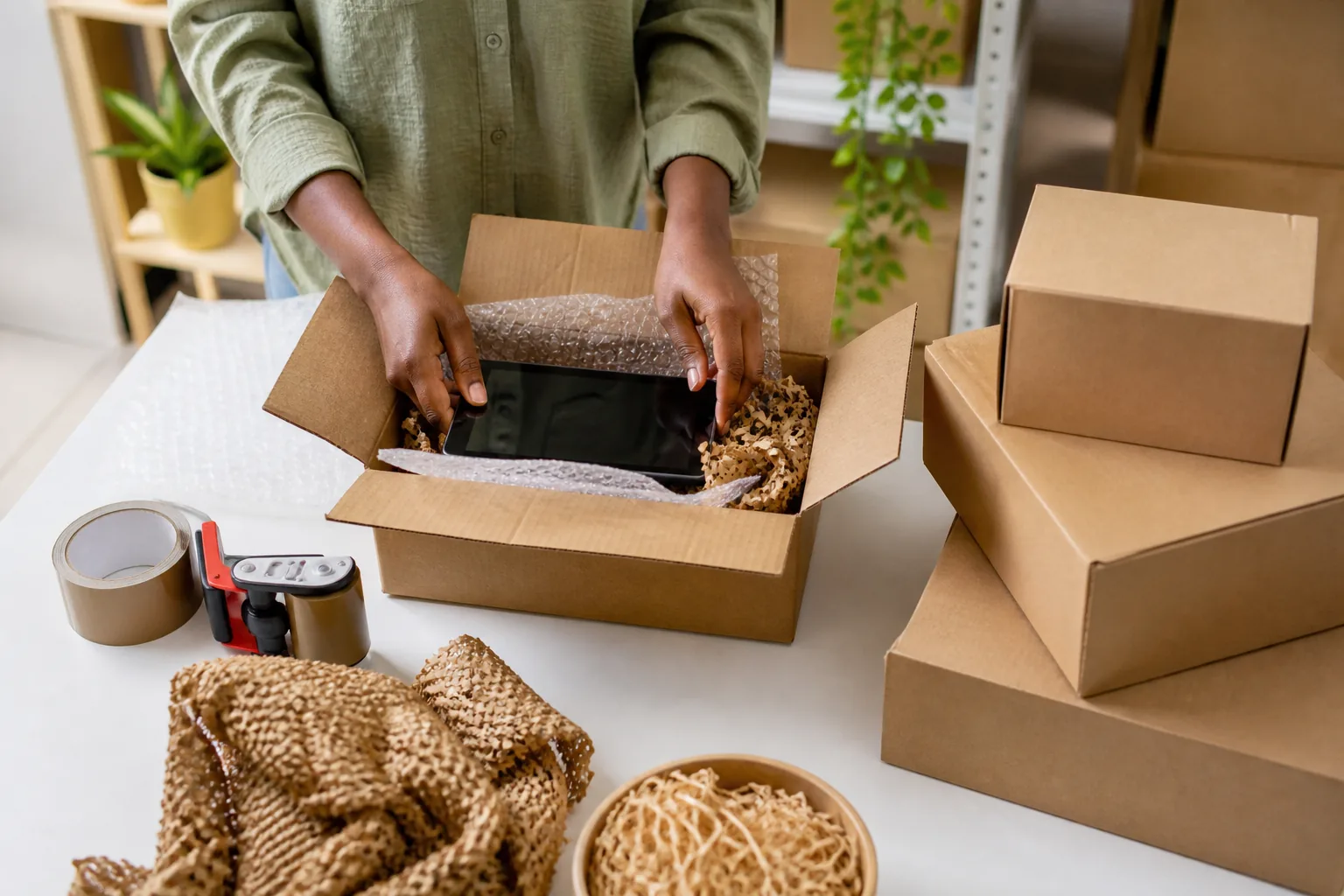
Good packaging online orders Kenya customers have already paid for or reserved is not mainly about decorative tape. Its first job is to keep the correct product protected, identifiable and accountable from the seller's shelf to the agreed handover point. A neat parcel cannot repair a wrong model, weak box, leaking bottle or missing cable.
Packaging also forms part of the order record. When a buyer reports damage or a missing item, photographs taken before sealing, the packing list, parcel weight and courier receipt can help both sides understand what happened. They do not automatically prove that every later problem is the courier's fault, but they create a much better starting point than memory.
On JAAT, each seller remains responsible for packing and dispatching their own orders. Courier choices, processing time and tracking vary, so read the current JAAT shipping and delivery policy and agree the specific arrangement with the buyer before dispatch.
Start with the confirmed order, not an empty box
Packing should begin only after the seller has matched the order to the stock record. Print or write a simple packing slip that identifies:
- order or enquiry reference;
- product name, model and variant;
- quantity;
- serial or batch number where relevant;
- accessories and documents promised;
- buyer's confirmed delivery name and contact;
- delivery method and payment status; and
- the person who checked and packed the order.
For electronics, compare the model number on the product, box and invoice. Check plug type, colour, storage capacity and included cable. For beauty or consumable products, check the seal, batch details and expiry date where applicable. For fragile home items, inspect for chips or cracks before wrapping. Photograph any identifier without unnecessarily exposing the buyer's personal information.
Do not write “paid” merely because a buyer has sent a screenshot. Confirm receipt through the actual payment channel. If payment will be collected on delivery or at pickup, write that clearly on the internal handover record.
Choose packaging for the actual journey
A parcel collected from a counter has a different journey from one moving through several depots and motorcycles. Ask how the package will be stacked, exposed to rain, scanned and handed over. Then match the outer packaging to the item's weight, fragility and shape.
A sound corrugated box should not be crushed, damp, torn or too large for its contents. A courier's packaging guide may specify limits or special materials, so check before accepting the order. DHL's current general guidance recommends a sturdy box, individual wrapping for multiple items, void fill to prevent movement, secure sealing and a clear address label. That is useful practice, but the selected Kenyan carrier's rules control the actual shipment.
Use a rigid box when pressure or impact could damage the product. A padded mailer may suit a light, non-fragile item with no sharp edges. Bags alone are normally a poor choice for glass, electronics, liquids or retail boxes that the buyer expects to arrive uncrushed.
Protect the contents from movement and contact
Most avoidable parcel damage comes from movement, contact or compression. Place cushioning around the item, not only on top. Fill empty spaces so the contents cannot gain momentum when the box is moved. Do not make the fit so tight that outside pressure transfers directly to a screen, bottle or delicate housing.
Apply product-specific controls:
- Phones, routers and accessories: protect screens and ports, keep loose plugs away from finished surfaces, and do not place heavy adapters on top of a device.
- Glass and ceramics: wrap pieces individually, separate them with dividers and keep them away from the box walls.
- Liquids and cosmetics: close caps firmly, use a sealed secondary barrier and absorbent material where suitable, then keep containers upright if the carrier supports orientation instructions.
- Several items in one order: separate hard objects from soft or easily scratched products. Count every unit before sealing.
- Sharp or irregular products: cover exposed points and reinforce areas that could pierce the box.
A “fragile” sticker is an instruction, not structural protection. The parcel must still withstand ordinary handling. If a product is exceptionally valuable, delicate or difficult to replace, ask the carrier about declared-value rules, insurance and acceptance conditions before promising shipment.
Treat batteries, aerosols and restricted goods separately
Some ordinary retail products become regulated or restricted during transport. Lithium batteries, power banks, perfumes, aerosols, solvents and certain chemicals may require specific packaging, labelling, documentation or an approved transport route. A courier accepting normal parcels does not mean it accepts every product.
Do not hide a battery or liquid from the carrier to avoid a fee or restriction. Give an accurate description and follow the carrier's current dangerous-goods instructions. Never dispatch a swollen, leaking, recalled or visibly damaged battery. Isolate the product, stop using it and obtain appropriate safety guidance.
JAAT's seller tips can help with accurate product information, but sellers must still check product-specific law and courier conditions.
Seal and label without creating new risks
Close all flaps and reinforce the main seams with suitable parcel tape. Do not rely on string, decorative ribbon or a single strip that can lift from dusty cardboard. Remove or cover old labels and barcodes from reused boxes so scanners and handlers receive one clear instruction.
Place the transport label on a flat, visible surface. Confirm the buyer's name, telephone number, destination and any pickup branch. Avoid advertising a high-value item on the outside. Put a duplicate order reference or return contact inside the parcel in case the external label is damaged, but do not include unnecessary identity documents or financial information.
Before handover, photograph the sealed package from several angles and record its weight when practical. The photo should show condition and label placement without being published publicly.
Use a two-person or two-pass final check
A small seller can still separate packing from final approval. The second check can be performed by another team member or by the same person after stepping away and reading the order again.
Confirm all of the following:
- The product and variant match the order.
- Quantity and promised accessories are complete.
- The item was inspected before packing.
- The packaging suits weight, fragility and route.
- Empty space is controlled and items cannot collide.
- The box or mailer is sealed on every opening.
- The address and telephone number were confirmed.
- Payment status and delivery charges are recorded correctly.
- Restricted-item requirements were checked.
- Pre-dispatch photographs and the packing record were saved.
Record the courier or pickup handover
For a courier shipment, retain the consignment number, receipt, handover time and carrier name. Send the buyer the tracking reference only after verifying it. If the service has no tracking, disclose that before dispatch rather than after a parcel is delayed.
For customer pickup, ask the recipient to inspect the exterior and confirm the correct order at the agreed location. Record who collected it and when, using a proportionate method that respects personal-data obligations. Do not ask for or store more identity information than the transaction genuinely requires.
If a buyer reports damage, respond promptly and preserve the order, packaging and tracking evidence. Follow the seller's stated terms and the JAAT returns and refunds process that applies to the transaction. Shop-direct refunds are handled with the seller; JAAT Protected procedures apply only to eligible orders that used that checkout path.
Reduce packaging waste deliberately
Right-sized packaging usually saves material and transport space while protecting the order better than an oversized box full of disposable filler. Reuse clean, structurally sound materials when they remain suitable, and choose recyclable paper or corrugated protection where it can provide the required performance.
Kenya's Sustainable Waste Management Act establishes a waste hierarchy that prioritises avoidance, reduction and reuse before recycling and disposal. The Extended Producer Responsibility Regulations also place obligations on covered producers and packaging streams. A marketplace seller should not assume these rules apply only to large factories; manufacturers, importers, repackagers and brand owners should determine their actual obligations and obtain professional guidance where needed.
Make the handover repeatable
The best process for packaging online orders Kenya customers can receive confidently is one a seller can repeat on a busy day. Create a packing station, keep approved materials in known sizes, use one checklist and record damage or returns by packaging type. If a particular box repeatedly fails, change it instead of treating every complaint as bad luck.
Sellers preparing a product catalogue can review the JAAT seller guidance and apply for a managed shop or business space. Before listing, confirm stock, final price, warranty, delivery coverage and the payment mode that will appear on each offer.